

At one time, Egypt's regional capital, Al Minya, was a little city in the Middle Egypt area that received little attention from tourists. It was during the First Intermediate Period that Minya became a minor power center and remained so into the Middle Kingdom when Egypt's the Old Kingdom was overthrown by the New Kingdom.

If you're looking for an expansive temple complex with an enormous basilica, two birth homes, and an ethereal lake, the Temple of Dendera is it.
The site is home to various ancient Egyptian monuments, including those from the Ptolemaic period.
However, there is evidence that it was initially occupied by construction dating as far back as Pepy II's the Old Kingdom.
It is regarded as one of Egypt's finest-preserved structures and is notable for its Ptolemaic-style reliefs, which constitute one of the outstanding examples of Egyptian decorative art.
Tourists may climb to the top of this temple to get a bird's-eye view of the complex, a unique feature.
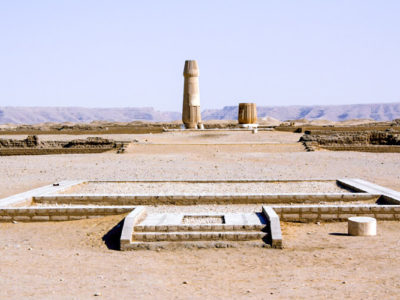
At the end of the 18th Dynasty, Egypt's capital city, Tell El-Amarna, was razed to the ground, and its ruins are now part of a vast Egyptian archaeological complex. Akhenaten ordered the city's construction in 1346 BC, which was abandoned shortly after his death in 1332 BC when his successors retook the town. "Akhetaten," which means "horizon of Aten" in Egyptian, is the name given to the city by the ancient Egyptians.
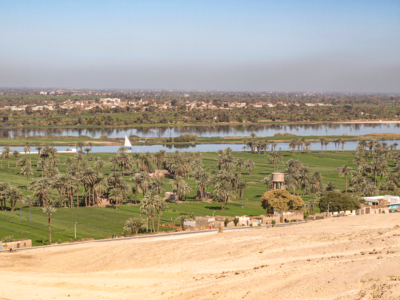
In Egypt, you'll constantly find something new to uncover, since there are several fascinating tourist destinations with significant historical significance, such as Beni Hashan, which is a good example.

Fayoum is Egypt's biggest oasis and the one that is closest to the Nile River and the capital, Cairo. In the vicinity, Lake Qarun was created around 70,000 years ago when the Nile inundated a depression that is today known as the district of Fayoum. Today, the lake is nourished by the canals that link it to the river.
 Reach us on WhatsApp